12 – 16 years
Secondary education
In adolescence, independent thinking awakens. Secondary school accompanies it with rigour, art and a commitment to the world.
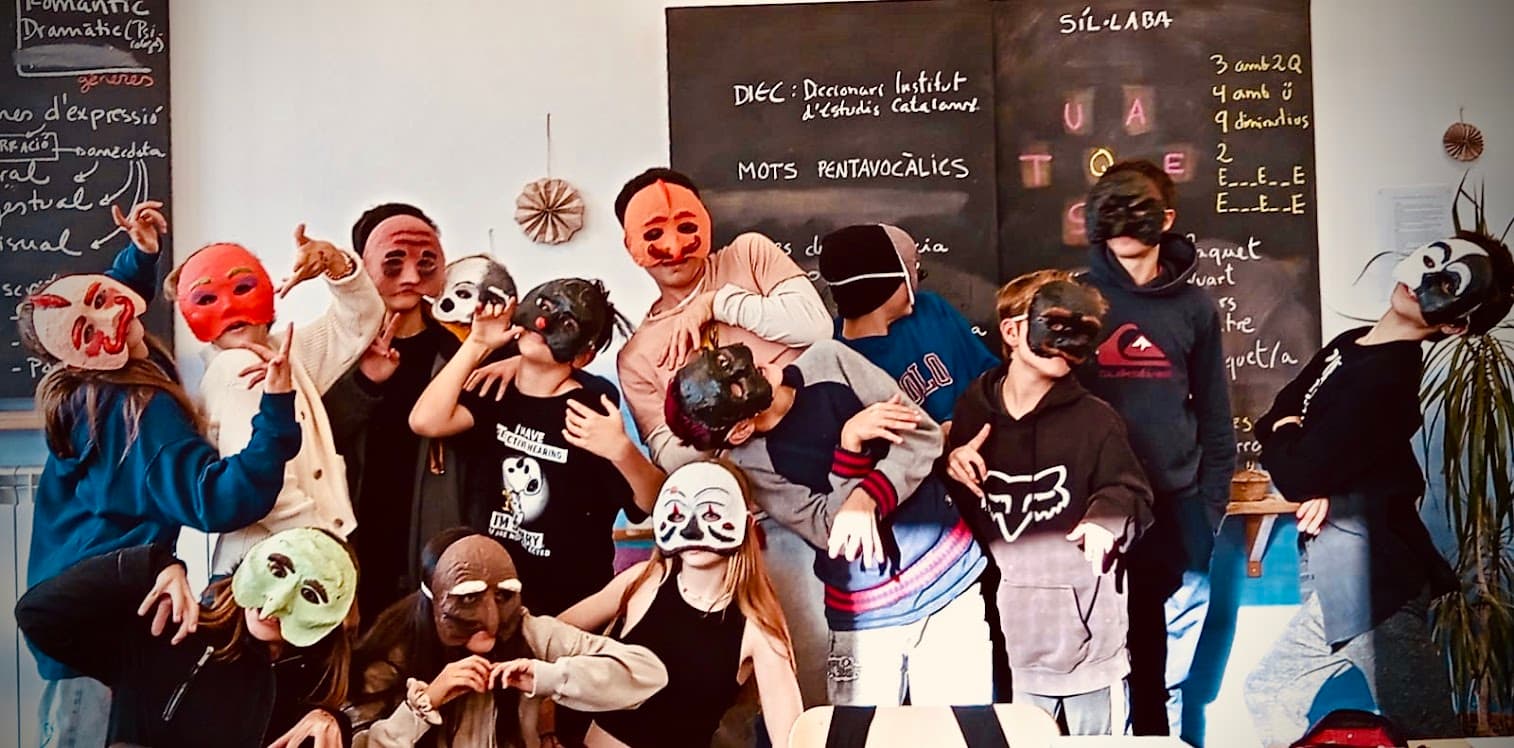
For me, La Font has been a school that has allowed me to learn in a very natural way where most of the things we did were related to each other. From my time in primary and secondary school I take away many moments that I will not forget: the very good relationship with the teachers, the way of learning in which what they explained to us was tangible and not completely theoretical, the spaces of the school and the friendships... I think that for me, a person with a fairly scientific mind, it has been a way of developing many skills that go beyond the intellectual, allowing me to train more glo
In secondary school, young people want to understand the world and their place in it. The curriculum responds with living, experimental science, critical thinking, art and craft, and projects that connect learning with reality.
The aim isn't only to pass: it's to shape free young people, able to think for themselves, to work with their hands and their heads, and to commit to the community. When the stage is over, they move on solidly to sixth form or vocational training.
Technology, at the right time
Here technology isn't hidden away: it's introduced once young people have the roots to use it consciously. In secondary school, at around 14, they learn to program and to understand how things work from first principles, not just how to use them. Whoever grasps the fundamentals can learn any tool that comes later.
With puberty the time has arrived when the human being is ripe for the formation of his own judgements about the things he has already learned.Rudolf Steiner — The Education of the Child
Critical thinking and autonomy
We support young people in asking questions, forming their own reasoned views and working in an increasingly independent and responsible way.
Living, experimental science
Science is learned by observing and experimenting first, and drawing conclusions afterwards: from the phenomenon to the law, never the other way around.
Art, craft and projects
Art, crafts and projects give knowledge a practical meaning and help young people discover their own abilities. Choral singing and instrumental ensembles are part of the rhythm of every week.
Social commitment and readiness for the future
We nurture responsibility, teamwork and commitment to the world, with a solid foundation for further study.
The best way to understand it is to come and see
A Waldorf school is best understood by walking through it. We open our doors several times a year, and every month you can come on a guided visit. No commitment: just to get to know us.